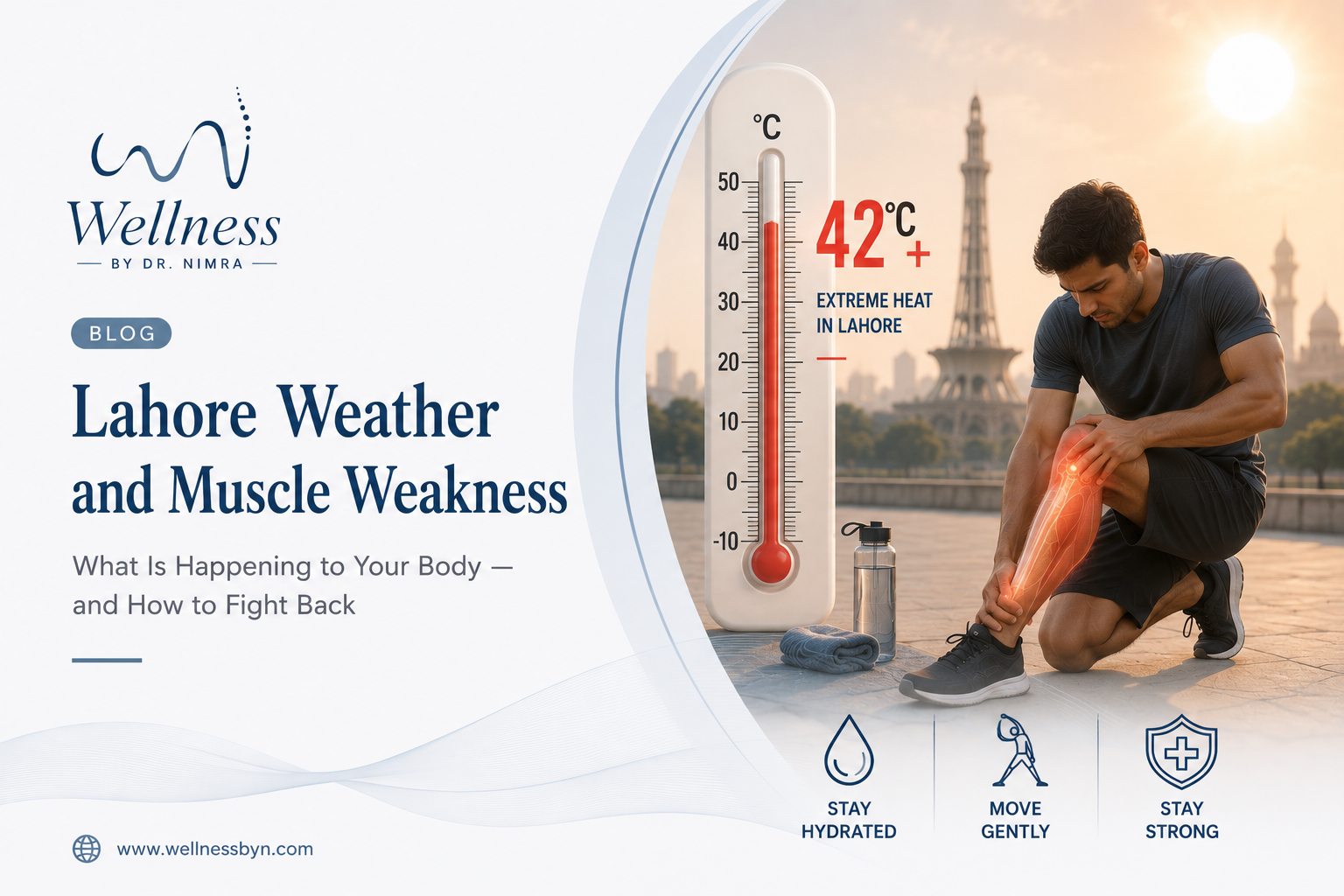
Why Lahore Weather Cause Muscle Weakness, Fatigue, and Joint Pain (2026)?
Weather Today in Lahore: 99°F (37°C) with temperatures forecast to climb past 108°F (42°C) by Tuesday. If your joints feel heavier than usual, your muscles ache without reason, or you feel a low-grade fatigue that no amount of rest fixes, it's the Lahore weather, and it's not an excuse. It is a physiological explanation.
Author
Dr. Nimra, DPT
- Licensed Doctor of Physical Therapy
- Certified Medical Writer
- Founder of WellnessbyN
- Experience since 2019
Table of Contents
- Why Lahore Weather Causes Muscle Weakness
- Barometric Pressure and Joint Pain
- Effects of High Temperature
- Humidity and Body Pain
- Symptoms to Watch For
- How to Reduce Weather-Related Pain
- When to See a Doctor
- FAQs
Why Lahore Weather Is Causing Pain in Your Muscles and Joints
Lahore is located in the Punjab plain, a region known for significant fluctuations in barometric (air) pressure, particularly during the pre-monsoon transition, mainly from May to July. That shift in atmospheric pressure is not just a meteorological event. It has a measurable effect on the human musculoskeletal system.
Lahore weather health effects can include muscle weakness, fatigue, calf pain, and headaches due to extreme heat, dehydration, humidity, and fluctuations in barometric pressure. These factors may affect electrolyte balance, muscle function, joint lubrication, and pain sensitivity, leading to fatigue, cramps, and body aches in susceptible individuals.
What are the pain-causing factors in Lahore's weather?
Barometric pressure or Air pressure
At ground level, air pressure is the weight of the air pressing down on everything. Under normal conditions, the pressure inside your joint capsules equalizes with the air outside. When environmental barometric pressure drops (pre-monsoon), the tissues inside your joints expand slightly to compensate. That expansion presses on surrounding nerves, producing the familiar ache many Lahoris describe as "weather pain."
A study published in The American Journal of Medicine (Felson et al., 2007) examined 200 patients with knee osteoarthritis and found a significant association between changes in barometric pressure and pain severity (coefficient = 1.14, P = .02).
Air Pressure ranges in Lahore weather.
- Normal atmospheric pressure ranges from 998 to 1015 hPa
- Rapid changes or pressure below 1000 hPa can trigger migraines, sinus pressure, and joint discomfort in people sensitive to weather fluctuations.
- Temperature in Lahore
Temperature is also associated with pain. A systematic review and meta-analysis published in PLOS ONE (2023), based on 14 observational studies indexed in PubMed, Cochrane, and Embase, confirmed a correlation between temperature and barometric pressure on one side and osteoarthritis pain intensity on the other.
Lahore weather can cause muscle weakness because high temperatures increase sweating and dehydration, while humidity and changing air pressure affect circulation, nerve sensitivity, and joint tissues. These factors may lead to fatigue, cramps, body aches, and worsening joint pain, especially in sensitive individuals.
Temperature ranges in Lahore weather.
- Normal (average) : 15°C to 40°C throughout the year;
- Temperatures above 35°C in summer can increase the risk of dehydration, headaches, muscle cramps, and fatigue.
- Temperature below 10°C may worsen joint stiffness and pain in sensitive individuals.
- Humidity in Lahore
A UK cohort study of over 2,600 participants (George et al., 2017) found that low air pressure, higher humidity, and stronger wind speed were each associated with increased pain reports. Higher humidity, exactly what Lahore experiences in the weeks before the monsoon arrives (April to June), was among the strongest environmental predictors.
Humidity ranges in Lahore's weather.
- Normal (average): Between 35% and 60%;
- Humidity below 30% may cause dry eyes, sinus irritation, and headaches.
- Humidity above 70% can increase fatigue, joint discomfort, migraine frequency, and perceived body pain in sensitive individuals.
What Happens In Muscles At The Physiological Level During Changes In Lahore Weather?
The mechanism involves four pathways:
1. Synovial fluid viscosity. Cold or pressure-drop conditions, such as dust storms or rain, make the synovial fluid in joints more viscous, reducing its ability to lubricate joint surfaces and increasing friction-related pain with movement. Weather changes may contribute to pain and stiffness, but underlying conditions such as osteoarthritis can also play an important role.
2. Nerve sensitization. Fibers that carry pain sensations to the brain become more reactive and sensitive under pressure fluctuations. Research has confirmed that repeated drops in air pressure, even of 5 hPa or more, increase mechanical hypersensitivity in people with existing muscle pain.
3. Soft tissue expansion. A research paper on rheumatoid arthritis showed that when air pressure decreases, connective tissue (such as muscles, ligaments, capsules, or fascia) surrounding arthritic joints expands, causing swelling that directly compresses peripheral nerves (nerve endings) and increases pain signals to the brain.
4. Dehydration and electrolyte imbalance. On extremely hot days (above 39°C) in Lahore or during monsoon humidity, sweat rates increase, which causes the loss of several important minerals. These minerals include sodium, potassium, and magnesium, which help with muscle contraction and nerve conduction. A decrease in these minerals can cause muscle cramps, weakness, and a kind of generalized lethargy that most people mistakenly attribute to overwork or poor sleep.
Common Symptoms Related to Lahore's Weather
- Dull pain in the knees, hips, or lower back without any new injury
- Morning joint stiffness that becomes better after 20–30 minutes of movement
- Muscle cramps, mostly observed in the calves and thighs, especially during the afternoon heat
- Unexplained Fatigue or laziness
- A feeling of "heaviness" in the legs or arms
Who Is at Greater Risk of Weather-Related Muscle Weakness and Joint Pain?
Not everyone is affected by weather changes in the same way. Certain individuals may be more sensitive to Lahore's extreme heat, humidity, and barometric pressure fluctuations.
Older Adults
As people age, joint cartilage naturally wears down and muscle mass decreases. This makes older adults more likely to experience joint stiffness, muscle weakness, and fatigue during periods of extreme weather.
People with Arthritis
Individuals living with osteoarthritis or rheumatoid arthritis often report worsening joint pain and stiffness when air pressure drops or humidity rises.
Individuals with Previous Injuries
Old fractures, ligament injuries, sports injuries, and previous surgeries can leave tissues more sensitive to environmental changes. These individuals may notice pain or discomfort before weather shifts.
People with Dehydration or Electrolyte Imbalances
Excessive sweating during Lahore's hot summer months can lead to the loss of electrolytes such as sodium, potassium, and magnesium. Low levels of these minerals may contribute to muscle cramps, weakness, and fatigue.
Outdoor Workers
Construction workers, delivery riders, traffic wardens, farmers, and others who spend long hours outdoors are at higher risk of heat-related fatigue, dehydration, and muscle weakness.
Individuals with Chronic Health Conditions
People with conditions such as diabetes, cardiovascular disease, kidney disease, or chronic pain disorders may find it more difficult to adapt to temperature and humidity changes.
Physically Inactive Individuals
Poor muscle strength and reduced physical conditioning can make the body less resilient to environmental stress, increasing the likelihood of fatigue and body aches.
How To Prevent Muscle Weakness in the Hot Weather Of Pakistan?
- Avoid going out in peak hot temperatures (11 A.M to 5 P.M)
- Drink plenty of fresh juice or water to stay hydrated. Juices may contain electrolytes.
- You may also add electrolytes (ORS sachet) to water for this weather-related muscle weakness.
- Keep your head covered while going out.
- Use a good-quality humidifier inside your home and office.
- Never skip your daily stretches to keep your muscles functioning.
- You may add magnesium glycinate to your diet. (Do not use it without any doctor’s advice.
- Maintain adequate sleep. (7-8 hours).
In physiotherapy practice, patients with knee osteoarthritis, chronic low back pain, and previous sports injuries frequently report worsening symptoms during Lahore's hot and humid months. These complaints are particularly common before rainfall or during sudden weather transitions.
If you are experiencing these without a recent injury or underlying condition, Lahore's weather today may be the cause of your pain. It is better to get a professional consultation for your muscular conditions. Or, if you are looking for physiotherapy sessions, book your appointment with Dr. Nimra at wellnessbyN.
Frequently Asked Questions (FAQs)
Q1: Why do my joints hurt specifically when the Lahore weather changes?
Changes in barometric (air) pressure are common during Lahore's pre-monsoon and monsoon seasons. This also causes the fluid and tissue inside your joints to change. This ultimately put pressure on nerve endings, producing pain or stiffness. Research confirms this connection, particularly in individuals with osteoarthritis, rheumatoid arthritis, or a history of joint injuries.
Q2: At what barometric pressure level does joint pain worsen?
Studies show that a decrease of even 5 hPa (hectopascals) or more is linked to increases in pain sensitivity and joint pain in summers. Air pressure in Pakistan's weather drops noticeably during the summer/monsoon.
Q3: Can I exercise during the Lahore temperature today (>35 C)?
Yes, but if you are concerned with gym exercises, do them with care and supervision. Avoid outdoor exercise between 11 AM and 5 PM. Exercise in the early morning or indoors. Please focus on stretching, walking, seated exercises, and maintaining adequate hydration throughout.
Q4: Does high humidity in Lahore make muscle pain worse?
Yes. Higher humidity in Pakistan leads to increased muscle soreness and weakness.
Q5: Can dehydration alone cause muscle weakness in hot weather?
Yes. Dehydration of as little as 2% of body weight has been shown to disrupt muscle function and increase fatigue and muscle pain.
Q6:Who is affected most in this heat?
The people most likely to experience weather-related muscle weakness and joint pain are:
- Adults over 60 years of age
- People with arthritis
- Individuals with previous joint or muscle injuries
- Outdoor workers exposed to heat
- Dehydrated people
- Individuals with chronic medical conditions
- Those with low physical activity levels
Key Takeaways
Lahore weather, specifically the combination of extreme heat, falling barometric pressure, and rising pre-monsoon humidity, creates physiological conditions that genuinely increase muscle weakness and joint pain.
In clinical practice, many patients report worsening joint stiffness, muscle cramps, and generalized fatigue during Lahore's hot and humid months. While weather is not the only factor that causes pain, environmental changes often increase existing musculoskeletal conditions.
This is not just an experience but is supported by much research. If symptoms do not improve after two weeks, or if there is swelling, redness, or fever, consult a physician or physiotherapist in Lahore. Weather-related pain is manageable. Undiagnosed structural pathology is not.
Medical Disclaimer: The information provided on WellnessbyN is intended for educational and informational purposes only and should not be considered medical advice, diagnosis, or treatment. Always consult a qualified healthcare professional regarding any medical condition or before starting, stopping, or changing any medication, supplement, or treatment plan.
- Author: Dr. Nimra
- Reviewer: Dr. Nimra
- Date Published: 13 June 2026.
- Date Modified: 20 June 2026.
- MedicalWebPage type: Informational and preventive health
References
- Felson, D.T., et al. (2007). Changes in barometric pressure and ambient temperature influence osteoarthritis pain. The American Journal of Medicine, 120(5), 429–434. PubMed
- George, E., et al. (2017). The effect of weather on pain and other symptoms. Versus Arthritis / University of Manchester. Versus Arthritis
- Associations between weather conditions and osteoarthritis pain: a systematic review and meta-analysis. PLOS ONE (2023). PMC10120534
- The effects of lowering barometric pressure on pain behavior. PLOS ONE (2025). DOI: 10.1371/journal.pone.0317767
- Edwards, S. (2024). Fluctuating barometric pressure — a cause for an increase in arthritic pain? Environmental Physiotherapy Association. Link.
Author Bio
Dr. Nimra is a licensed Doctor of Physical Therapy, certified medical writer, and founder of WellnessbyN. With years of clinical experience and professional healthcare writing since 2019, she creates evidence-based content that helps readers in every aspect of their lives, aligning with the vision of wellness. Her long-term vision is to build WellnessbyN into a trusted digital healthcare platform connecting people with reliable health information and expert care.
For content collaborations, guest posts, or SEO health writing inquiries, contact: dr.nimrasiddiq@gmail.com
Want to book your appointment?
If muscle weakness, fatigue, or joint pain persists despite hydration and activity modification, a physiotherapy assessment may help identify underlying causes and guide treatment.
You may contact us at dr.nimrasiddiq@gmail.com or send a message at 00923354700870.
Google Business
Linkedin
Facebook
Instagram
Share:

Dr. Nimra PT
A dedicated medical professional passionate about helping patients heal through holistic care and natural innovation. Focused on patient-centered solutions, clinical insights, and treatment plans that deliver real, measurable health results.
0 Comments